ice on the guzzle

At the start of this project, I decided it would make sense to move into the office towards the end of my year in order to better understand how the company runs as a whole. Last week was my last official week outside on the farm — and my last week on the tide.

For now, anyway.

We spent some time getting back up to speed after Christmas weekend. The company had sold a ton of oysters over the holiday and needed bags from our crew ASAP, especially in time for New Years. But we also had our eyes on the tide: There were just 60 or so cages left to bring in and Berg wanted to get all those bags that we’d laid out flipped so they weren’t drowning in the mud.

But despite good timing, the weather was a factor, as always. Monday afternoon’s tide was rained out. Tuesday’s was risky because it was well below freezing and the windchill put us down into the single digits. But Chris, Will and Berg hustled before it got too low and pulled all but 9 cages out with a few bitter-cold runs on their own. By Wednesday, we were looking at a somewhat milder day (in the teens!) and a tide that coincided with sundown. After spending the day culling, we headed out with some fresh gloves and a couple extra layers under our waders. It was a minus .9, which meant we’d have plenty of time on the flats to get the bags flipped. We started with the bags we’d tied together with a system line, flipping them out of their pockets of mud to give the oysters on the bottom some breathing room. We’d put about 600 bags out there, all full of oysters that had repaired themselves in the warmer weather and were now laying dormant for the winter. The system lines are there to help us if the bay ices over — we’ll be able to pull up 50 bags at a time with the hauler. So it’s our safeguard as well as a contingency plan. We’ll be able to harvest, even in the bitter cold, plus it gives us a couple thousand oysters to pull up if we need them in a pinch.

We still had about 400 bags to tie together: A tricky feat when your gloves are the size of an astronaut’s and the air is biting cold. Chris and I laid the lines down on the bags while Will went at the zip ties bare-handed. But as the sun started to set, the temps dropped and the winds picked up. We were racing the cold, pulling our gloves off to get each tiny plastic tie zipped shut, and wincing at the air exposure. I could get about five bags tied before my hands went numb. As we kept moving, it got down to two bags. Pretty soon, I was leaving the gloves on and doing my best with the big, bulky fingers. (The guys did a much better job fighting the cold.) We got about halfway through the bags before the water came back up. By about 5:30, with a massive full moon rising above us, we were back on land — dry but not nearly warm. As I drove back to the office for a round of shop beers, the thermometer in the car read 19 degrees. Ouch.

The oysters can stand tremendous cold bouts like this. But whenever we leave oysters on the float overnight, we keep them off the ground on a palette (sorry, Cory) and keep a tiny electric heater going.

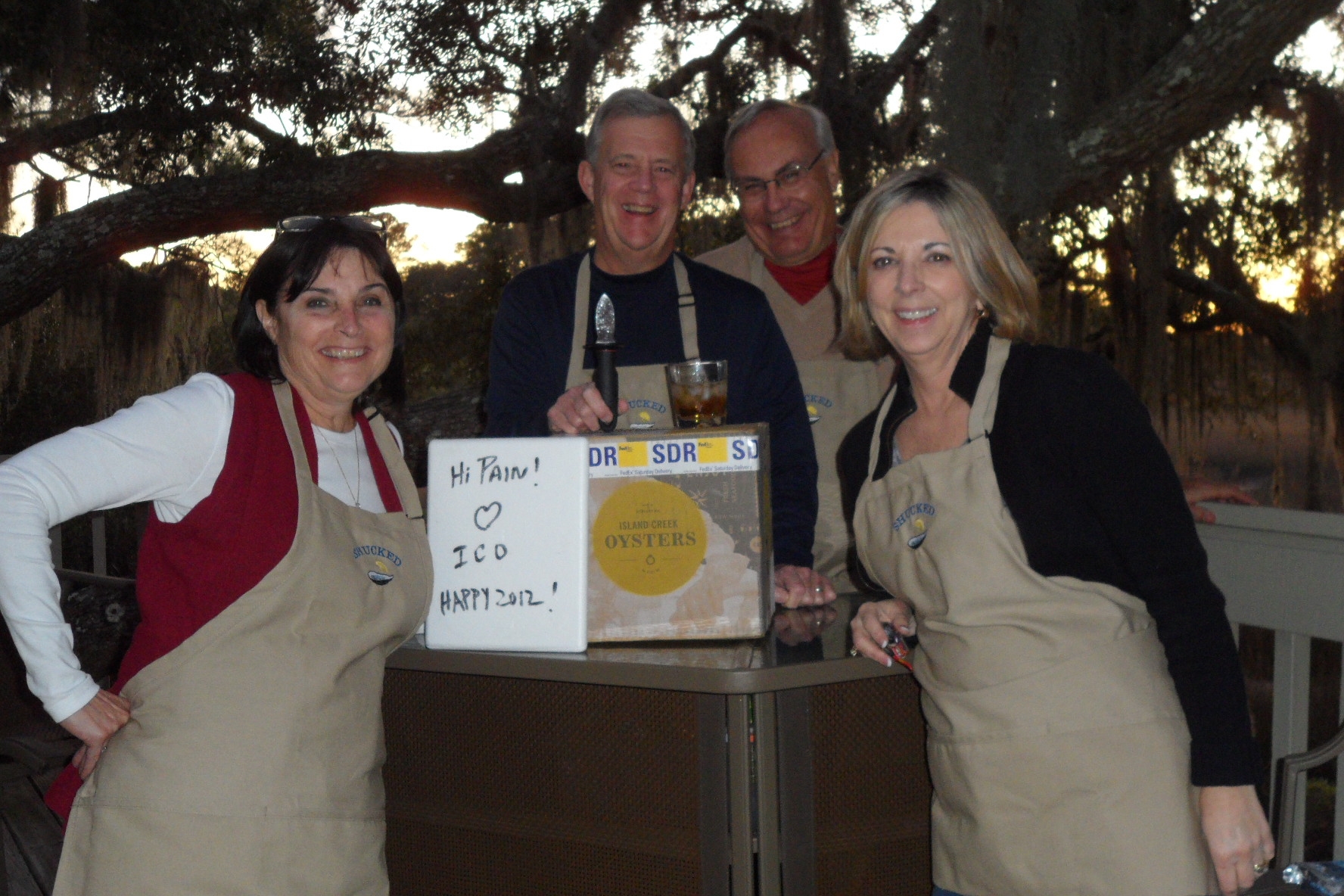
During the day, we use Mr. Heater, a propane-run space heater. And yes, I’m the one who begged to use it most. So much so that the guys called me pro-Pain for most of the winter.

Mr. Heater

Keeping us warm along with the heater was our trusty new coffee maker, donated by my Mom and Dad. Handy on the days when it’s too cold to make a run to Frenchie’s.

Thursday was New Year’s Eve day and my final day on the float. We culled in the morning, then washed and bagged after a long lunch at Tsang’s. The snow started around 10 that morning — by lunchtime, we were looking at a few inches. But that didn’t stop Berg and Chris from running out to pick up those last 9 cages. Believe it or not, we got all of them out of the water on the last day of the year. I can’t think of a more fitting end to the season. Or a better occasion to celebrate.

loading up in the snow

I ended up spending New Year’s with my crew at a party thrown by Eastern Standard (where we shucked) and later at the Publick House where I brought the guys up to visit Dave, who was working. It was quite the party and a damn fine way to wind down my final week on the farm.

Skip, Nicole, Erin, Shore & Chef Jeremy

a very fuzzy Chris, Berg, and Will

Nicole and Erin behind the boat

So now what? I’m onto a new adventure as Office Girl. I’ll still be blogging (from what I hear, things can get pretty exciting up at the office…sometimes). I got through Day One (not nearly as challenging as my first Day One) and am happy to be holed up inside a warm office while there’s still snow on the ground.

But… I already find myself missing my crew, the float, the water. And oddly enough, the smell of oysters.

I must be hooked.

I honestly thought I could get through my last few winter weeks on the farm without a single snowstorm. I’m also that girl that never thought it would rain on her wedding day and got married outside on the beach.

Naturally, it poured.

And we got 22 inches of snow in Duxbury this past weekend.

The snow made for a picturesque ride down to the farm on Monday, especially since Berg made the call to put us on the tide at 6:45 a.m. We arrived to find the sun rising over the snow-covered beach and our Oysterplex trimmed in icicles.

There was a lot of busy work involved with that much snow. A2, Quinn (who’s back in town for a few days on winter break) and I ran up to the shop to grab the farm truck only to find it completely snowed in. We shoveled it out (at one point, Billy Bennett stopped to watch us shovel and yell out: “Not what you signed up for, was it Erin?”) and ran it back down to the water so we could pick up the cages, which Berg and Chris had hauled out of the water for us. We made a few trips, getting several dozen cages out and stored away in the process. Our short day ended when the tide came up — we celebrated our mini success with a big breakfast at Persy’s.

Last week, we had purposely put a massive pile of bags into the cooler so that we could all take some time off for Christmas. Last Thursday and Friday were impressive: Despite sub-freezing temps, Pops (who is also back for winter break), Will, and Berg washed a ridiculous number of crates so we could load up the truck and get this huge stack of oysters packed away. Hopefully Santa is delivering a few bags like these to you and yours this week.

loading up Santa's sleigh

Monday was also the Island Creek Christmas party, a raucous affair that started at 4 pm and ended well past midnight. We set up a raw bar in the shop and a liquor bar in the office which made for a number of freezing-cold sprints from one venue to the next.

Pedro and the crew

It was a wild night for the whole family. Skip pulled out half a case of champagne which went down like water with our glass perron. A2 found out that despite a lot of practice, he still can’t beat Skip in a shucking contest. And late, late into the night, we all came face to face with Don Merry’s ferocious dexterity with a hose. Dave and I left the scene soaking wet and laughing our heads off around 11:30.

Skip wins

This week, Dave and I are spending some time in Knoxville with my Murray side of the family (the 15-hour drive went well – our usually carsick dog, Rex, managed to pitch a no-hitter). While we won’t be eating any oysters (my expecting sis-in-law Allison wouldn’t be allowed to eat them anyway – yay!) we’ve got plenty of snowy Duxbury memories to get us through the week. Plus, I know somewhere in Charlotte, our friends the Williams are shucking and slurping a few dozen Island Creeks on our behalf. (Thanks, Jim!) Also looking forward to a visit from my sis Shannon and her husband, Brian, so we can toast the upcoming arrival of their new, adopted daughter Gracyn. Yes, 2010 is looking to be a very baby-filled year.

Speaking of babies, the Wall Street Journal did a nice job capturing the story of Island Creek in its infancy in this blog post (unfortunately, they misspelled Skip’s name… but the rest of it is accurate and fun to read).

Finally, a quick note of thanks for keeping up with Shucked. Through the ups and downs, the seed, the harvest, and the cold days of winter, it’s been an absolute joy to chronicle, especially knowing you’re out there going through it all with me. Here’s hoping your holidays are filled with family, love, and plenty of Island Creek oysters.

Cheers.

About two weeks back, on our last warm-ish day before the bitter cold set in, Skip’s crew convened at the office after work. It was 4:15 p.m. and the sky was dark. Skip presented us with an oyster farmer dilemma: What does one do between the time the sun sets and the bar opens? We were done with work, we’d put in a full day and we were ready for a brew. The Winsor House wouldn’t open for another 45 minutes. Skip’s answer: Warm Bud Light. (Random fact about Skip: He likes his beer warm.)

But more often than not, the farmers I work with enjoy heartier beers, especially ones that pair well with our ’sters. So it only made sense, Skip told me a few months back, that Island Creek and Harpoon Brewery had decided to pair up to brew Harpoon’s next 100-Barrel Series, Island Creek Oyster Stout, a heady, dark beer brewed with our very own oysters. The guys are pretty stoked: They get to pair their creative energies with another local institution, one who supported us at Oyster Fest and who we support by drinking gallons and gallons of their IPA.

Island Creek Oyster Stout due February 5th, 2010

Last week the brewer Katie came down to check out the grant — she’s still working on her test batches (that’s actually chocolate stout in the bottle) but will be brewing in January. The beer launches on February 5th so keep your eyes on local beer menus.

While we were out there (it had been awhile since my last trip to the grant) we actually got some work done too (riiiggghhht…. work). We’ve been prepping for winter by stashing some oysters into mesh bags that will lay on the bottom of the grant. We connected all the bags together with system lines so that if there’s ice (fingers crossed there won’t be), we’ll be able to pull the bags up easily. Out on the tide last week, we got about 200 bags connected. As we zip tied everything together bare-handed, Skip cried out: “Hey office girl – no gloves?”

tying our mesh bags together

the last of our cages, coming out this week

As we’d hoped (prayed, begged for, desperately needed), the last of the seed came out of the water this week. Berg pulled the very last of it today and Skip will get it planted tomorrow. No more dirty bags, no more cages (except the ones we have to pull)… We can all breathe a little easier. Berg especially (that stout can’t get here soon enough).

Friday was our first below-freezing day and of course, we weren’t ready for it. We got to work to find our hoses completely filled with ice (we defrosted them in the shower at the Maritime School) and spent the day tackling the temps and high winds.

water freezing to our crates on contact

new guy Chris demonstrates how to cull in below-freezing temps

Despite running out of propane for our space heater midday we survived the coldest day of the year. And while the temps are already much lower than they were my first day, I’m feeling a lot more prepared this time around. Maybe it’s the fact that the office is calling my name in just a few short weeks. Or maybe I’m just plain used to it.

After my day at Per Se, Berg texted me: “If you can’t handle the heat you can come back to the farm.” Ah, Berg. Always good at handing me a dose of reality. Honestly, I was ready to get back. Our trip to NY had left me with stars in my eyes – we’d eaten at Craft, visited the Food & Wine offices to chat with Kate Krader and Kristin Donnelly, who wrote a great blog post about it, and spent the day (and night) at Per Se. An oyster farmer can only handle so much.

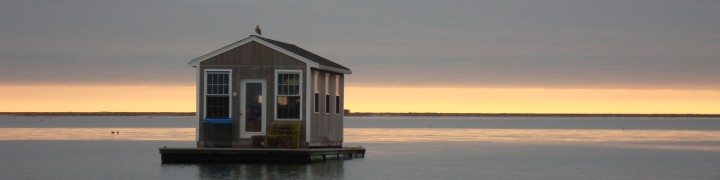
My first day back, we were on the move once again. The float came back to land (if you can remember waaaay back, it’s been on the water since April.).

Now we’re anchored next to the dock by the Maritime School which means we’re hooked up to electricity and running water and we’re within spitting distance of the bathroom. (Hooray!) We like our new little nook. When the tide’s high, we can see over the wall that shields the dock from most high winds and waves and during low tide, like the epic drainer we had last night, it feels like we’re hidden away from the rest of the world. Nice little place to be for the winter.

We celebrated our first week with a few swigs of Harpoon from a growler Skip brought down. We used our sustainable ice bucket just for the occasion.

our sustainable ice bucket

hey look! it works!

We’ve been lucky to have a mild fall and early winter so far. There are rumblings that this might be a “less-than average” year for snowfall – here’s hoping that’s true (though, Skip admitted that the oysters do like the cold for a little while).

And believe it or not, we’re nearly done with seed! I’m sure I sound like a broken record – we wanted to have it all planted by the end of October. But we depend on good weather and the tides to get access to the lease and neither have been on our side this fall. But Skip and Berg planted more of it yesterday and we’re hoping to get the final cages emptied and planted by next week. Once that’s done, we can get our cages up to storage and call it a year. Just in time for Christmas.

As for me, my time on the farm is winding down – incredibly hard to believe. The plan is for me to come off the farm and start working in the office on January 1st. I know, I know – Erin, you’re turning into a suit! (And conveniently, right in time for whatever cold snap we might get.) But that was my plan from the beginning and I’m sticking to it. I need to see how the company runs things from the other side. It’s a missing piece on my farm-to-table path so I’m looking forward to learning a new aspect of it all.

Yes, the guys are giving me a hard time about it. They’ve even come up with a new name for when I call it quits on the farm: Part-Time Pain.

Our dinner reservation was for 8 pm so after a quick costume change, I met Skip and Shore back at the Time Warner Center. Walking through the restaurant’s sliding glass doors felt completely surreal – I’d spent the day working behind the scenes, watching the kitchen hustle before and during service. Now, I had the rare opportunity to admire the hard work from the other side.

Skip and Shore had given the front-of-house staff a quick presentation about Island Creek earlier in the afternoon at a pre-service meeting. Benno ribbed the guys about being Red Sox fans but then offered them the floor where Skip spoke about our oysters as well as the Nantucket Bay scallops and razor clams we sell. The staff fired a few questions at Skip (how did he prefer to eat his own oysters; who caught our scallops) before he handed things over to chef David who went over the menu for the day. Again, there was a round of insightful questions: Was there lobster in the mousseline? Where was the sea bream from? Was there bacon in the lentils? How long had the beef been braised? They weren’t just prepping for their customers. They were genuinely curious about the food itself. (I sat next to a friend of mine, Andrew Newlin, a captain who’s been at Per Se for three years; Andy and I went to high school together but I didn’t realize he worked there until I saw his smiling face when I accidentally walked through the front door instead of the service entrance for my stage. Though it was brief, I really enjoyed catching up with him for the day.)

Maitre’d Chloe Genovart then went through that night’s seating chart. Skip, Shore and I sat in amazement as they listed the parties that would be dining alongside us. Many were regulars (the servers had long memories, pointing out how many times guests had been to the restaurant) and even more seemed to be VIPs (doctors, a baroness, magazine editors). The fact that everyone on staff was clued into who would be dining that evening made our arrival seem even more official – they knew our moves before we could even make them.

We sat down to glasses of champagne and the restaurant’s signature salmon cornets and Gruyere gougeres. Our captain, Antonio Begonja, arrived with menus that turned out to be more fun than for real – inside, the guys found photos from this year’s NY Yankees World Series win. We weren’t going to need menus. The chefs had already created an incredible 23-course journey that would take us almost 5 hours to finish. And while I could wax for hours about every course, I’ll spare you the gut-busting details and hit you with the highlights.

Course 1 (after the two amuse, of course):
The Patriot Oyster
This was Skip’s favorite way to eat an oyster with a slight modification: Raw, splash of vodka and a slice of jalapeno (he usually takes his with green Tabasco – the jalapeno was a nice touch)

Course 3
Oysters and Pearls
I relished every bite knowing how hard Kenny worked on each element of the dish. The texture blew me away – rounded pearl after rounded pearl, the dish is about layers and levels of firmness. The caviar explodes while the oysters and tapioca practically melt together. You can taste the oyster in the tapioca base but just slightly – it’s the sauce (Kenny kept bringing up the sauce) that pulled it all together. Vermouth, a hit of vinegar, and all that rich and wonderful butter. Twelve outstanding bites.

Course 5
Nantucket Bay Scallops
This dish haunted both Skip and I all night. A small mound of Pacific sea urchin sat atop our scallops and a tiny bit of pickled ginger and a thinly curling paper-thin slice of crispy rice paper. The sea urchin was gentle and addictive but never masked the sweetness of the scallops. Skip called it the best dish he’s ever eaten.

Course 6
Duxbury Razor Clam
The clam meat was just barely cooked through and served on the shell in three small segments with broccolini leaves a hint of Meyer lemon and Spanish capers. Shore was a huge fan.

Course 7
Abalone “Rockefeller”
I’d never tried abalone before – the meat was firmer than I thought it would be and it was covered with a jolt of mousseline hollandaise and bits of bacon and spinach. I spent several minutes examining the shell, trying to figure out how abalone are harvested. Picking up on my fascination, our waitstaff cleaned out and boxed up our abalone shells, offering them to us as parting gifts.

Course 8
White Truffle Oil-Infused Custard
This has been called a TK signature and will be a personal lifelong memory. Served inside a hollowed out egg, the truffle-oil infused custard is topped with a black winter truffle and veal reduction “ragout.” The display itself makes the dish – only about half of the eggs they cut are usable. And it was paired with a stunning wine called Radikon, which thrilled me for it’s odd resemblance to an unfiltered cider or even a pale ale. I could not get enough.

(One dish later, as they were clearing the table, our team of servers asked if we were ready to get started. The meal had really just begun.)

Course 11
Terrine of Hudson Valley Moulard Duck Foie Gras
The presentation here included a set up of six salts from around the world (Himalayan, Hawaiian, French) This would be one of my “last meal” dishes – toasted, crumbly slabs of brioche, perfectly placed celery branch “ribbons,” slivered breakfast radishes, and of course, the impossibly rich slice of foie gras. Luxury on a plate.

salts

Course 13
Butter-poached Nova Scotia Lobster Mitt
The mitt is really more of a knuckle and was placed alongside tender tortellini filled with forest mushrooms. My shredded black trumpets made an appearance, as did the slivers of young French leeks I helped prep. Skip appreciated the lobster meat, calling it his new favorite lobster dish.

Course 14
Carnaroli Risotto Biologico
Along with the lobster, this was the one-two punch of the night. The creamy risotto was really just a blank canvas for what was to come. Chloe presented us with an ornamental wooden box which housed a massive, overwhelmingly fragrant white truffle. She held it in a piece of cloth and shaved slivers of it onto the risotto directly under my nose before another server drizzled a spoonful of melted brown butter over top, blowing the aroma into the depths of my skull. It was the most seductive dish any of us had ever experienced. Watching the deliberately intrusive shaving ritual, inhaling the aroma, tasting the subtle, earthy flakes… a blog post isn’t the venue to tell you how it really made me feel. But damn, was it memorable.

Course 16
Rib-eye of Marcho Farms’ Veal Roti a la Broche
They presented the rib eye before slicing and serving it – it was skewered on a medieval-looking sword which then showed up on Skip’s plate. A few bites of sweetbreads and squash puree, layers of salt, meat, and dripping juice – this dish could have been a meal on its own.

Course 19
Coffee and Doughnuts
One of three desserts, this one was about as complex as coffee and doughnuts could be. The cappuccino was actually a semifreddo served beside a couple of deliciusly cakey house-made pastries. I had just about hit my max but managed to put the whole thing down.

Mignardises
The chocolate presentation would have to be boxed up. By this point, it was well past midnight and the dining room was empty. But as we stumbled into our coats and out into the night, the staff waved us off sending us out with goodie bags and enormous, unbelieving smiles.

I’ve never had an experience like that before, but would no doubt welcome it again (though only at Per Se; by the end of the night, the dining room with its glowing fireplace felt more like the living room of a friend’s apartment than a four-star restaurant).

It’s clear after my time there, both in the kitchen and the dining room, that Per Se is not meant to be a mere restaurant where one can eat, linger, and remember. It’s designed for everyone involved: the diner, the line cook, the back server, the chef de cuisine. It’s a place to learn about, immerse oneself in, and idolize the entire art of gastronomy.

It is a temple to dining.

And an experience I’ll never forget.

“Sense of Urgency”

There are a million tiny details about Per Se that I could bore you with (how I shredded black trumpet mushrooms into a million pieces, pitted 180 olives, or lined up dozens of tiny baby leeks to cut into perfect one-inch slivers). These details, while fascinating to me (Dave said I sounded like a kid on Christmas as I recounted them all to him), will most likely not have the same effect on you. Instead, I’ll tell you that the phrase above is placed strategically around the kitchen (above doorways, mostly) and that because of it (and the fact that they’re working for chef Thomas Keller) everyone there either runs or scurries. At all times.

Oysters and Pearls at the pass

At Per Se, Oysters & Pearls goes by OandP (from server to the pass, those letters rang out all day during my stage, or kitchen trail). Chef Keller came up with the idea in 1995 – he was inspired by the word “pearls” written on a box of tapioca and decided to pair them with their source of origin, the oyster. Today his tapioca/oyster/caviar dish is served daily at both Per Se and The French Laundry.

While the point of my visit was to watch the dish prepared from beginning to end, I picked up more than a few basics. I got to glimpse of the inner workings of a perfectly engineered machine.

I arrived at the restaurant (on the 4th floor of the Time Warner Center) at noon and was promptly taken on a kitchen tour by Gerald San Jose, the restaurant’s culinary liaison. The 5,300 square foot kitchen (the whole restaurant is 12,500 sqft), he explained is broken down into pastry, storage, prep, private dining, and the line (there are also offices, more storage, 18 reach-in refrigerators and a temperature-controlled chocolate room). We walked through dry storage where they keep the very few canned items they use as well as their cooking vinegars and oils. (“The finishing vinegars are kept under lock and key,” he said with a short laugh.)

From there, it was on to the line where I met chef David Breeden, the intricately tatooed sous chef who took me through the paces. The line, or main kitchen, is small for what it produces, but every section is strategically placed. The pass, where dishes are expedited to servers during service, is actually a stainless steel island in the center of the kitchen that acts as a prep station during the day but is transformed before service into a paper-covered counter – the chefs stand on one side, the servers approach from the other. It’s also covered with every menu for the night; there are several prix fixe menus plus the salon’s a la carte menu along with that day’s menu from The French Laundry. The famous closed-circuit flatscreen TV system which connects the two kitchens by a webcam is perched directly overhead so the two staffs can watch each other work.

Chef David introduced me to Kenny Cuomo, canape chef de partie, who I’ll get back to in a minute. Following our oysters, I spent an hour with seafood butcher, Santiago Jimenez, a friendly, towering guy from the Dominican Republic who’s worked there since the restaurant opened in 2004. He had a plastic bin of Island Creeks at his station and was quickly opening and separating them. (He shucks around 1200 oysters per week which puts him at about 300,000 over the course of his career.) As he shucked, he told me how he’d just broken his favorite shucking knife (it was 7 years old) and showed me his other butcher knives which had been sharpened and sheered down to practically nothing. With each oyster, he was careful not to puncture the belly but slid the knife gingerly between the top muscle and the shell before scooping the meat and all of the oyster juice into a plastic deli container. He then trimmed the bellies by holding the oyster meat flat against the top of his palm snipping away the outer meat with a pair of needle-nosed scissors. In three quick snips he had a perfect almond-shaped nugget (the trimmings were also reserved). He handed me the scissors to try a few, then put me to work trimming the rest. (Careful not to trim too much, I got the hang of it after about 30 but once Santiago started snipping beside me I realized what a snail I was – he finished 4 in the time it took me to do one. Practice.)

So, the oysters are separated: bellies, juice, trimmings. The three containers are sent to Chef Kenny at the canape station. Kenny was a whirling dervish, kind and funny but always moving, always gliding through projects and his work. Each day, Kenny prepares O&P and each day, he strives for absolute perfection. “There are variables, always variables, that can change or adjust the dish. But my job is to make it perfect regardless,” he told me quietly as he worked.

We started with the tapioca, which had been soaked in milk for 8 hours. In a pot, he heated milk and cream, then added a deli container of oyster trimmings (from about 170 oysters). While they steeped, he got his sabayon mise en place ready: 14 egg yolks, 170 ml of oyster juice, and a bain marie (hot water bath).

Thomas Keller has been making this dish since he opened the French Laundry, Kenny explained. “That’s 15 years of perfection every day,” he said a little wide-eyed. He showed me the dishware that was specifically designed for O&P by Raynaud (the flat, round dish has a 2-inch round cup in the center and a subtle, white-on-white houndstooth check around the trim).

the dishware

Back at his station, he whipped heavy cream in a mixer and set it aside. He strained the oyster trimmings from the cream infusion, then added the tapioca pearls and the infusion to the same pot and returned it to a low heat. He started his sabayon, whisking the egg yolks and oyster juice together.

“Both have to come together at the same moment for this whole thing to work,” he said as he stirred both seemingly at once. He handed me the tapioca spoon.

I stirred and watched him whisk until the tapioca became firmer — then suddenly Kenny declared, “We’re ready.” He folded the sabayon gently into the tapioca and handed me a black pepper grinder. “100 cracks, please, chef,” he said as I got busy counting to 100 (something I’m used to on the farm). He folded the whole mixture together and then quickly moved us over to the patisserie station where he had room to set up his dishware.

Taking a little of that reserved whipped cream, he folded some into the tapioca to keep it from firming up (which it would do as the mixture cooled). Using a large spoon, he doled perfect portions into each of the dishes (90 covers for the night; he got 89 servings out of his batch) before setting them aside on trays to chill until service.

In the meantime, he pulled together the poaching liquid: 1.8 pounds butter, 125 ml oyster juice, 125 ml champagne vinegar, 250 ml Noilly Prat vermouth.

At that point, Kenny was off to work on other dishes and I got busy helping with some other prep work. As I was slicing olives later on, Kenny leaned over and whispered: “Look at you, Chef. You’re cooking at Per Se.” Ha! I laughed a little. Actually, I was chopping at Per Se. But it certainly felt grander than any other chopping I’d done in my life.

Chef de Cuisine Jonathan Benno introduced himself in the middle of the day and while I didn’t get to spend much time with him he was helpful and accommodating. Skip, Shore, and Matthew love Benno, or JB as they call him. And he, in return, gives them an incredibly hard time about the Red Sox (during a pre-meal staff meeting, he presented them with “I heart NY” t-shirts and a couple jabs about the World Series win).

I was invited to stay for a small part of dinner service and watched as the kitchen transformed into its “hectic” pace. The energy shifted ever so slightly; folks moved a little faster and heads were buried together at the pass while finishing touches were put on a dish. Nothing seemed frantic or harried, it just moved, rhythmically and in sync, like a well-rehearsed dance. (Though at one point, the phone rang and the whole kitchen stopped and held its breath. All eyes went towards the television and then to the phone’s caller ID. JB picked it up, spoke quietly, hung up, and went over to whisper something to Chef David. Later, I asked JB if that was Chef Keller on the phone. “No,” he said. “But when the kitchen phone rings during service, it’s only one of two people. Chef Thomas or someone at the French Laundry.”)

I stood beside Kenny as he plated a few O&P’s. The dish moved quickly: the order came in (the sous chef calls out the ticket and the whole kitchen repeats the order in unison, then by station – “table 26!”– “table 26 CHEF!”), Kenny pulled a prepared dish off a prep tray. It went into a warming oven while he put two perfect oyster bellies into a small pot along with a ladle of poaching liquid and some fresh chives. The pudding came out, Kenny spooned the sauce and oysters over top of the pudding, filling the cup almost to the brim.

Kenny pulled out Ossetra or sturgeon caviar and carefully draped it atop the dish, which was then sent to the pass and given a swipe with a towel. Chefs Jonathan and David examined the plate, which was then carried out of the kitchen by one of the waitstaff.

Oysters & Pearls: the plated dish

Of course, this description is brief and utterly simplified but the level of precision that is achieved within it, and every dish at Per Se on a daily basis, is mind blowing. Every minuscule component is pored over: every sliced olive, every oyster, every perfectly slivered artichoke heart. I stood beside an extern from the CIA, Ethan, as he tirelessly diced a small stack of Aji Dulce peppers until they were practically liquified (he was stretching his forearm by the end). Those peppers appeared as a mere bite on a cod dish later that evening but his efforts seemed monumental. From beginning to end, O&P probably takes Kenny and Santiago a combined three hours to prep and serve. Once on the table, it’s gone in about four bites. There is a standard here which has been set higher than almost any other restaurant in the world — and the preparation behind every dish lives up to that.

Of course, the chefs I met seemed content to be right where they were. At 4:20 on the nose (ahem), a server delivered plates mounded with staff meal (barbecue pork, two different salads, sauteed greens, and a macaroon) and throughout the entire day, no matter how high tensions would rise (a dish wasn’t thoroughly worked out for a VIP that night; timing was tight on prep) no one raised their voice and everyone calmly and respectfully addressed each other as “chef.” Granted, there was ribbing and poking fun (a good amount directed at me) but overall, there wasn’t an ounce of attitude or pretension.

On top of it, they fed me well. Both here and when we sat down to dinner a few hours later (stay tuned for part II).

The menu at Per Se simply calls it:

OYSTERS AND PEARLS
“Sabayon” of Pearl Tapioca with Island Creek Oysters
and Sterling White Sturgeon Caviar

Nothing to it, right? Tapioca with oysters and a hit of caviar. Right. Except when it’s part of a $275 tasting menu at one of the country’s finest restaurants. Clearly there’s more work behind it than words on a menu.

Chef Thomas Keller has been using our oysters since he opened Per Se in 2004. On an ever-changing menu, this dish is actually one of the very few that remains available daily. The oysters we send him are a specific cull, a compact shape and deep-cup (called the Per Se), which gives the kitchen exactly what they need to pull together the elements of the dish. After we cull them out, A2 counts and bags every one of them to ensure that Per Se gets the same bag of oysters every time.

While I’ve never eaten any of Chef Keller’s restaurants, I know that he and his kitchen staff put an incredible amount of research into the ingredients they use and hand selected our oysters after one of their chefs spent time on our farm. Tomorrow, I’ll be down in New York to spend a day in Per Se’s kitchen to get an up-close view of how exactly they prepare our oysters. My goal is to follow the dish from beginning (when our oysters hit their door) to very end (when they arrive bound in tapioca, cut down to the belly and laced with sturgeon caviar). With any luck and good note-taking, I’ll also be able to report on how a kitchen like this is run.

Naturally, having had very little professional kitchen experience but knowing the caliber of restaurant I’m about to gain access to, I’m jumping out of my skin right now. I have everything I might need (basic knife kit, empty notebook, couple pens, camera) along with a million questions… but I’ll refrain from asking them all at once. I think my only approach is to treat it like any other kitchen stage: stand back, watch, and learn. Hoping to put the first of two posts up this weekend with details on the day followed quickly with details on the dinner. And photos, of course. Wish me luck.

ICO fall

Ah, yes. The sun’s started setting earlier this week which means our days on the farm are about to get a bit shorter. For me this means no longer driving to work in the dark — which makes me feel like I’m part of the land of the living for awhile. But A2 kept joking yesterday that we needed to get a move on since the sun would be setting soon (this was at 2:30). So yes, there’s been a shift, albeit slight.

ico fall2

We’ve also seen all our gorgeous red and golden leaves start to drop, the cranberry bogs flooded and harvested, and the chickens start to fatten up for winter. The winds are picking up (we had what felt like 1-ft waves on the harbor yesterday) and I’m pretty sure we’ve gone through whatever pleasant fall days this season had in store for us. Oh well.

We had a skeleton crew last week with Berg and Skip traveling to Zanzibar and Will in Houston for a few days. By Friday, it was just A2 and I doing some quiet work on the float. This week, we’re back up to speed and have a boatload of work to get done. We still have seed (!) in cages on the lease that needs to be planted. Once that comes out, we still have to pull cages, get our bags put away and make sure everything is stored and secure for the winter (we’re stowing everything at a very friendly farm near the water). Lots of busy work, which feels a little like spring cleaning did, but there’s a little more urgency since we never quite know what the weather’s going to bring.

Right now, our oysters are right about at their peak – Dave and I tried a few on Friday just to be sure – as they are all over the country what with water temps dropping everywhere for the winter. But down south, the Gulf is dealing with a new challenge: the FDA has proposed a new regulation that all oysters harvested in Gulf waters during the summer months need to be processed, or hit with “mild heat or low-level gamma radiation.” The regulation wouldn’t go into effect until 2011 but the news has been extremely sobering for such a small industry.

Obviously I am a huge proponent of eating oysters raw, especially right out of the water. What this regulation is trying to combat is a bacteria called Vibrio vulnificus which is extremely rare but can be lethal to people with weakened immune systems. It’s not something we deal with in New England (fortunately) since the water temperatures stay below a point that propagates the bacteria. But for our friends in the southern oyster farming industry, this regulation, is going to pose enormous challenges and some folks have already spoken out and are lobbying against the ban.

Whatever the outcome, the main message to get across is that we need to support these oyster farmers no matter what. There are an important number of jobs and lives that depend on this industry’s success (mine included, now) and all we can do to help is eat more oysters.

DSC00541

Matthew and I got to Chicago on Wednesday morning and after solving various phone issues (we were both getting the shakes after a few hours without our Blackberries) stopped into Shaw’s Crab House. We were there for the Royster with the Oyster, which Shaw’s has been putting on for more than 20 years. We made it there in time for the Oyster Hall of Fame dinner honoring Rodney Clark, the newest inductee.

Personally, I find it fascinating that there is an actual place where the biggest, best-known names in oysters (Hog Island, Jon Rowley, Joan Reardon, Rowan Jacobsen, MFK Fischer, and of course, Island Creek) are honored in an official way (and yes, there is an actual hall in the form of a private dining room filled with photos of all the inductees). They get together this time every year to celebrate oysters, reconnect, and honor those who have kept these fascinating bivalves in the spotlight.

The dinner was a hoot. We slurped back oysters (Rod’s Queens, which I was told were about 12 years old, ShanDaphs, and Sand Dunes) opened by Rodney’s 25-year-old son Eamon (a master shucker – Rodney thanked him for “his stroke on the knife to the calcium”) and then sat down to dinner to hear speeches, the reading of letters from those who couldn’t be there and plenty of oyster conversation. Rodney’s Oyster House is up in Toronto where Clark is considered Mr. Oyster. He was an entertaining speaker who kept it short (it was only as long as the number of words that fit onto an airsickness bag, which is what he wrote it on) and referred to his placement in Chapter 11 of Robb Walsh’s book Sex, Death and Oysters as the only way he ever wanted to be affiliated with Chapter 11.

Hendo and I spent the rest of the weekend running around Chicago visiting restaurants with our oysters in tow. A few highlights were peeking into the Alinea kitchen from a side window during service one night (chef Dave probably would have kicked us off our perch if we’d spent one more minute spying on them; chef Grant hardly looked up from his work), being greeted at Charlie Trotter’s kitchen entrance by Mr. Trotter himself, hearing about the Chicago social scene from chef Bruce Sherman (who then sent us to The Wieners Circle for the best charred hot dogs of my life) and two incredible meals at Publican. Friday, we spent awhile chatting up the crew there and got to know owner Paul Kahan who was incredibly gracious and funny (I love that he visits Avec and Blackbird every night but almost always ends up at Publican to shuck oysters and drink a beer).

After Friday’s first Publican visit (we went back late-night for dinner), we went to Shaw’s where Steve LaHaie showed us his new collection of oyster plates (they were a gift from author Joan Reardon).

DSC00551

Eventually, we made it to the Festival where the annual slurp off ended with a win by Jon Ashby … who just happened to be wearing an Island Creek tshirt (we owe that guy a bag of oysters). And please, if you have a minute, you’ve got to listen to this emcee go on about the requirements for winning this contest. He was a riot.

I woke on Friday morning to find that the weather was doing exactly what it did my first day of work: wet, snowy, slick, and cold. This isn’t typical for mid-October but we are, after all, in New England. The snow came down even harder this afternoon — Dave and I watched from our living room as the Pats slid all over the field tromping the Titans on a snowy Sunday.

Friday ended up being a wash. We got to the harbor and watched the sailboats bob sideways while Berg and Greg bounced out in the bay on Morris’s boat in the rain only to find that they couldn’t land on the float. The waves were too high for us to be out there so we ended up at the shop working on some farm-gear upkeep for most of the morning.

This time of year is tricky for the crew. We’re all anxious to get the seed planted and get our cages out of the water but with the weather last week, we only made it out on the tide once. We did manage to get a solid night of celebration in – we finally had our crew outing in the city. The guys all took a limo up from Duxbury; Catie and Maggie met us after work/school; and Eva took the train up from Brown. We started at Post 390 for a couple beers and oysters and then moved on to Toro where we ate incredibly well: foie gras with pear chutney, roasted bone marrow, garbanzos with chorizo, smoked duck legs, our oysters with a citrus-y foam, kobe burgers, paella, and of course, a perron of cava.

DSC00505

DSC00517

We ended up at Eastern Standard telling stories and laughing uncontrollably. As always, it was a wild night out with the crew – one we definitely needed after all that hard work this summer (thanks, Skip).

We’ve got some work ahead of this week but I’ll be taking a short break from the farm to head to Chicago with Matthew. We’re going out for the Shaw’s Crab House Royster with the Oyster this Wednesday where we’ll check out the ChicaGourmet’s Hall of Fame dinner and spend a few days doing sales calls. The guys at Island Creek are always part of the event (they’re serving our oysters on Thursday night at the Goose Island beer dinner) and we’re looking forward to seeing our bud Rowan Jacobsen along with (hopefully) some other oyster notables.

And now, the really good news. I just got word that on Nov 12, I’ll be heading down to NY to stage at Per Se (talk about burying the lede here). We very kindly asked chef Jonathan Benno if I could come down for an afternoon and watch as Thomas Keller’s famed New York restaurant prepares one of its signature dishes, Oysters and Pearls … which just happens to include Island Creek Oysters. Thankfully, he’s agreed. We had a visit from one of the restaurant’s chefs this summer (it was part of a couple-week long educational program where the chef went around the country stopping at Per Se’s various purveyors to work for a few days); I’m looking forward to retrieving the favor by spending a day with chef Keller’s kitchen staff. I’ll be trailing the fish butcher and at the canape station plus I’ll get to hang out for a bit during service. Skip and Shore will head down with me to do a pre-meal presentation for the staff and later that night, the three of us will sit down for dinner (my first at Per Se).

I’m trying hard to contain the nerves that comes with something like this. For any chef, spending the day in Per Se’s kitchen is a treat. For a non-chef, oyster farming writer (that would be me) it’s just plain unexpected. Since learning about Island Creek’s relationship with Thomas Keller’s restaurants, I’ve been salivating over the idea of getting into the kitchen to see what they do with our oysters. After all, the whole point of spending this year on the farm was to watch an ingredient go from seed to table. Finally, after months of nurturing, planting, harvesting, and handling our tasty oysters, I get to see what happens to them in the hands of one of the country’s most revered chefs. And then, more incredibly, to taste them while sitting alongside the guy who grows them.

Not bad for a girl on an oyster farm. Right?